A research team led by Prof. XU Zhiheng from the Institute of Genetics and Developmental Biology of the Chinese Academy of Sciences has identified Tapt1, together with its partner Suco, as important genes for brain development. They play a vital role in maintaining the balance between protein synthesis and degradation.
This study was published in
PNAS on December 11.
Brain development is the structural basis for the establishment of cognitive function, emotional regulation, and learning capacity. Disruptions in the developmental process, caused by factors like toxin exposure or gene mutations, can lead to severe disorders such as autism spectrum disorder and intellectual disabilities. Therefore, understanding the molecular mechanisms that regulate brain development is essential for neuroscience and healthcare.
Proper neural development relies on correct proliferation and differentiation of neural stem cells. This process requires the synthesis of large amounts of different proteins. However, how the balance between protein synthesis and quality control is maintained has not been fully understood.
To fill this knowledge gap, Prof. XU's team has identified a key gene, Tapt1 (mutations of which led to severe developmental disease), plays an essential role in maintaining the homeostasis of newly synthesized proteins and brain development.
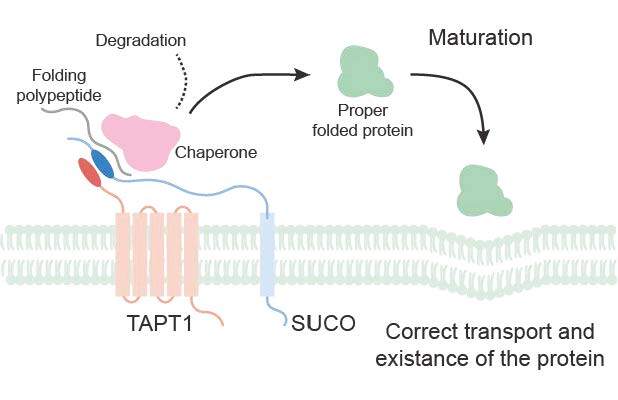
The researchers found that knockout of Tapt1 results in severe neurodevelopmental defects, leading to marked microcephaly and motor dysfunction. At the cellular level, loss of Tapt1 impairs protein transport and results in decreased newly synthesized proteins. Mechanistically, collaborating with its partner Suco, Tapt1 maintains the homeostasis between protein synthesis and degradation. This interaction allows neural stem cells to undergo normal proliferation and differentiation.
This discovery deepens scientific understanding of brain development and offers new insights into strategies for alleviating or treating neurodevelopmental disorders.
Furthermore, the researchers observed abnormal bone development when either Tapt1 or Suco was mutated, suggesting that the regulatory mechanism uncovered in this study may operate in multiple tissues or organs. This provides broader clues for understanding a range of developmental diseases.
TAPT1 interacts with SUCO to maintain the homeostasis of newly synthesized proteins (Image by XU Zhiheng's group)